The answer first: a fall listing needs exterior work on the calendar by late June
Western Washington does not give exterior trades a long runway. In NOAA's 1991 to 2020 climate normals for Sea-Tac, July is the driest month at 0.60 inches of precipitation and November is the wettest at 6.31 inches, with the same normals putting the July average temperature at 67.1°F and the January average at 42.8°F.
That is the whole story for a homeowner planning a September or October listing. The dependable stretch for paint, roofing, siding and drainage work runs from roughly early July into mid or late September, and the back half of that stretch is when your listing photos need to be taken.
So the sequencing question is not "when is the best time to paint a house in Seattle." It is "when do I have to sign the contract so the work is finished before the light goes flat and the rain returns."
Why each exterior trade cares about the weather differently
Paint is the most weather sensitive
Paint has the narrowest tolerances of anything you will do outside, and moisture matters more than the thermometer. Sherwin-Williams tells applicators that no coating should go on unless the surface temperature is at least 5°F above the dew point.
Temperature is the other half. Sherwin-Williams' exterior application guidance says the temperature has to stay in the suggested range and above the dew point for at least 48 hours after application, and warns that when nights cool off sharply, dew forms on everything after sunset and can seep into uncured paint. Some modern products are formulated to go on down to 35°F, but that is a floor for the product, not a recommendation for your siding in October.
That is why a paint job started late in the fall can look fine on the day and start failing inside a year. Siding that got rained on two days before, or a north-facing wall that never rose far enough above the dew point, will not hold the coating. If you are painting to sell, a failed paint job is worse than no paint job, because the buyer's inspector will name it.
Roofing wants dry decking, not just a dry day
Roofers work in the rain here when they have to, but tear-off is the risky part. Once the old roof is off, the sheathing is exposed, and a surprise band of rain means either a rushed dry-in or wet decking that gets covered up. Summer also gives shingles the warmth they need to seal down properly rather than sitting loose until the next warm stretch.
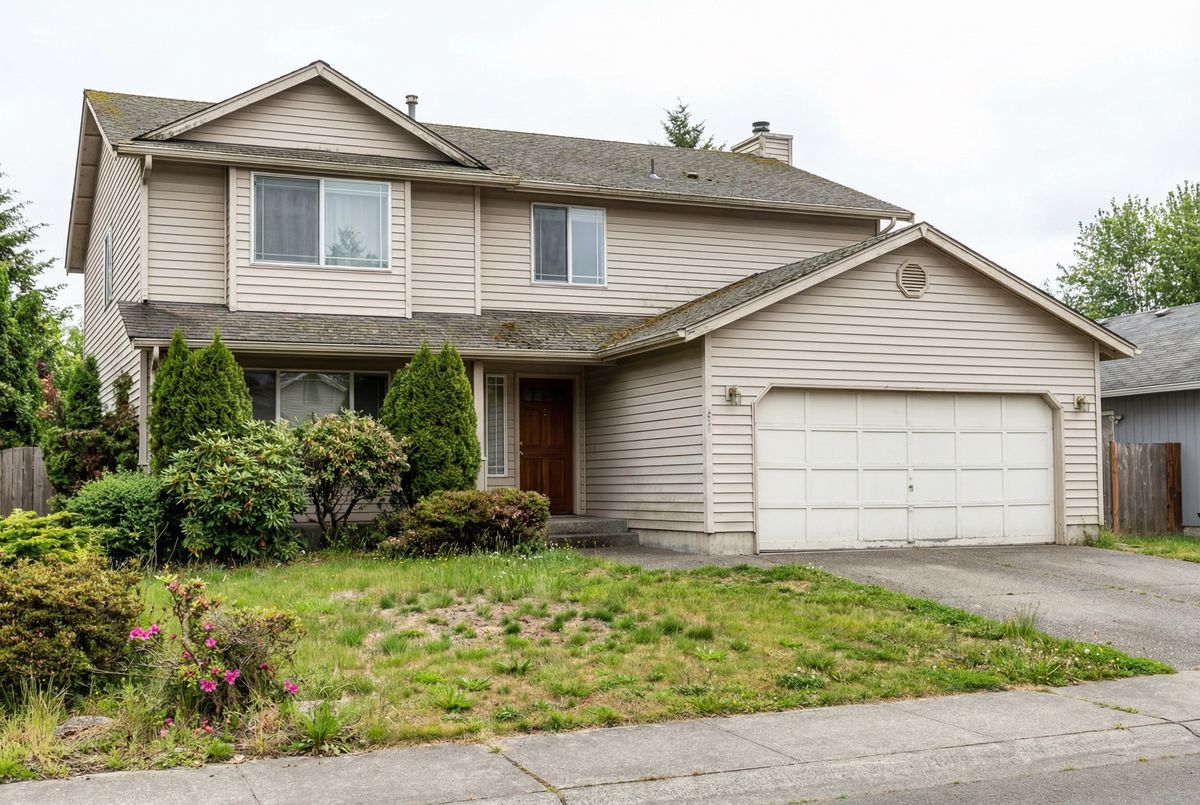
Roofing is also the project most likely to be a true condition item rather than a cosmetic one. A Puget Sound roof with curling shingles, moss colonies and visible granule loss is going to show up in an inspection report and in a buyer's repair request whether or not you address it first.
Siding is a moisture assembly, not a surface
Siding replacement opens the wall. Housewrap, flashing and any rot repair behind the old cladding all need dry weather to be done properly. This is also where Puget Sound homes hide their worst surprises, particularly homes built in the 1990s with hardboard siding, or with window flashing details that did not survive twenty five winters of horizontal rain.
Decks and hardscape are flexible, until they are not
Deck framing repairs, railings and stain can happen later in the season than paint, but stain and sealer have the same moisture problem as paint. Concrete and paver work needs dry, workable ground. Landscaping is the one thing you can genuinely push to the last two weeks.
Drainage: easiest to fix in dry months, hardest to explain in October
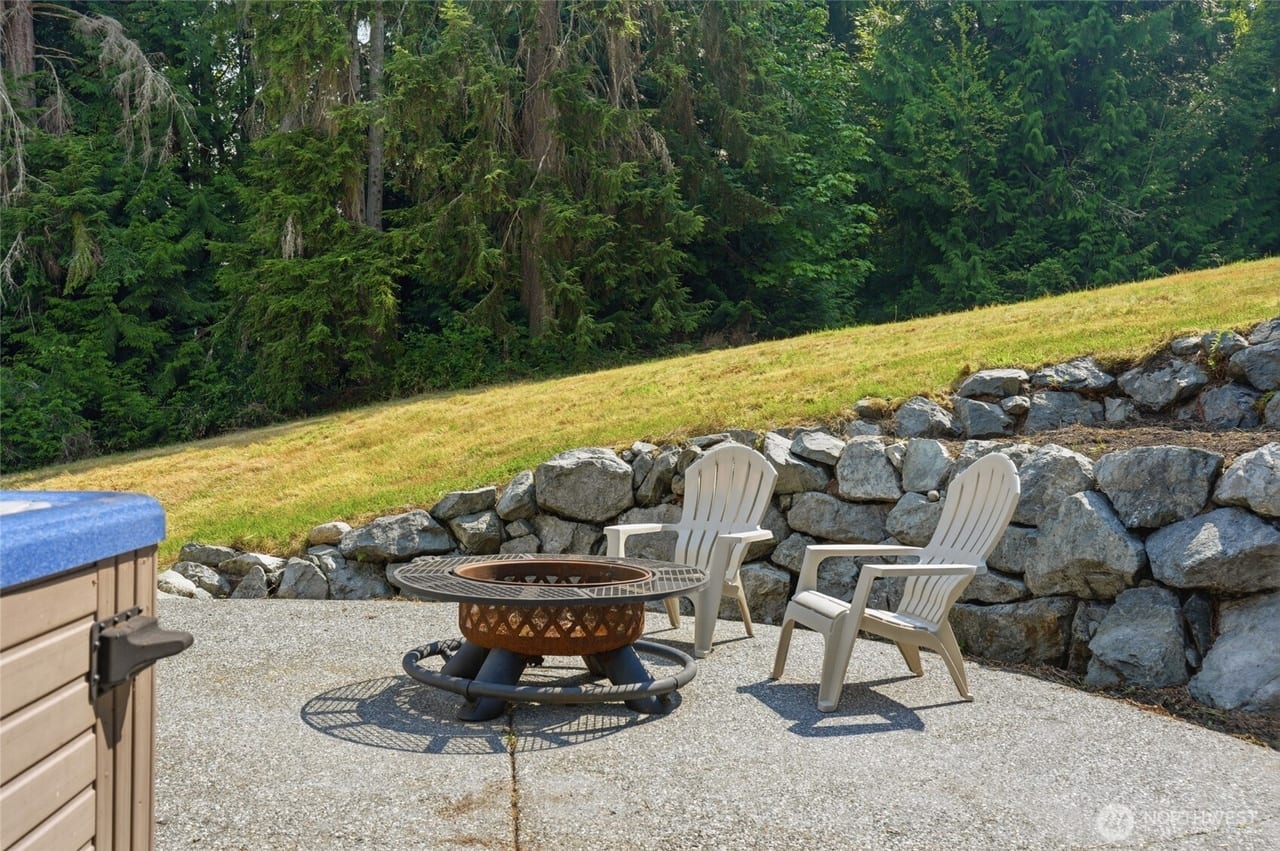
Drainage is the exterior issue most likely to turn into a price negotiation on a Puget Sound home, and it is far easier and cheaper to correct when the ground is dry. Downspouts that dump at the foundation, soil sloped toward the house, a crawlspace with standing water, a failed footing drain and a French drain packed with twenty years of silt are all common in older housing stock here.
Two reasons to do this work in July or August rather than after the rain starts:
- Excavation is faster and less destructive in dry soil, and your lawn has time to recover before photos.
- When a buyer's inspector visits in October and sees wet crawlspace soil, you cannot argue about it. When the fix was done in July and there is an invoice and a scope, the conversation ends there.
Drainage work almost never returns a dollar for dollar premium. What it does is remove a deal killer. Those are different jobs, and it is worth being clear with yourself about which one you are buying.
What the Cost vs. Value data actually supports on the exterior
The Cost vs. Value report is the usual reference here, and one caution comes first: its resale values are estimates gathered from surveys of real estate professionals combined with a cost estimating tool, not measured sale outcomes on individual homes. Treat it as a ranking of project types, not a promise about your house. The 2025 edition is the 38th annual report, published September 18, 2025.
The national pattern it reports is that modest exterior projects rank at the top. In the 2025 report, a garage door replacement averaged $4,672 against an estimated $12,507 of resale value, or 267.7% of cost recouped, and a steel entry door replacement averaged $2,435 against $5,270, or 216.4%.
Siding sits lower. The same report puts fiber-cement siding replacement at $21,485 against $24,420, or 113.7% recouped, and vinyl siding replacement at $17,950 against $17,313, or 96.5%. Those are national averages, so Seattle labor costs and Seattle buyer preferences will both move them.
The practical read for a Puget Sound seller:
- Replace the roof if it is at end of life. You are buying a clean inspection and removing a financing obstacle, not buying a premium. Get two or three local bids rather than trusting any published cost average.
- Do not replace sound siding. Repair the failed sections, then paint. Siding replacement scores well in the survey data because it is usually replacing something visibly bad.
- Paint is the highest leverage exterior dollar on most homes here, because it changes every listing photo and costs a fraction of replacement.
- The cheap stuff punches above its weight. A garage door and a front door are the two smallest line items on this list and the two highest ranked.
Sequencing: the order is not negotiable
- Roof, gutters and downspouts first. Everything above the wall drains onto everything below it. A new roof after new paint means crews on the siding again.
- Drainage and grading next, or in parallel. Excavation kicks up dirt. Do it before finishes.
- Siding repair or replacement, then trim and rot repair.
- Paint last among the wet trades. It needs a finished, dry substrate and it is the layer you do not want anyone walking through.
- Deck repair and stain, then landscaping, fences and the front door. These are the final two weeks and they are what show up in the photos.
Booking lead times, and why August is usually too late
The dry window is short and every exterior trade in the region is working inside the same few weeks, so good roofing, siding and painting crews in King, Snohomish and Pierce counties fill their summer calendars early. The crews still wide open in August are frequently the ones you did not want.
If you call in August, the realistic outcome is a late September or October start, which means paint applied at the edge of its tolerance and photos shot under gray skies in a wet yard.
Working backward from an early-September photo date
Here is a plain timeline for a home listing the third week of September.
| When | What happens |
|---|---|
| Mid to late June | Walkthrough, scope, fixed-price estimate signed, contractors reserved |
| Late June to early July | Materials ordered, any permits pulled, dumpster and access sorted |
| July | Roof, gutters, drainage and grading |
| Late July to mid-August | Siding repair, trim, rot repair |
| Mid to late August | Exterior paint |
| Last week of August | Deck, fence, landscaping, front door, cleanup |
| First week of September | Photos and video |
| Second or third week of September | Live on NWMLS |
Anything that slips by two weeks in June slips by two weeks in September, and September weather is less forgiving than August weather.
When a fall listing is not a reason to do this
A deadline is a bad reason to over-invest. Exterior work makes sense when it removes a defect a buyer would price against you, or when the home reads as neglected from the curb. It does not make sense when:
- The roof has ten years left and no visible failure. Disclose it and price accordingly.
- Your equity is thin. Renovating before a sale means the market has to cooperate, and it does not always.
- You need to be out in six weeks. Exterior scopes do not compress well.
- You genuinely do not want the disruption. An as-is sale is a legitimate choice, and FLYP can help arrange a cash offer if that is the better fit.
How FLYP handles the summer scope
FLYP's pay-at-closing renovation exists for the homeowner who has the equity but not the cash. There is $0 upfront and $0 during the work, no monthly payments, and repayment comes out of closing. What gets repaid is the fixed contract price on the signed estimate, plus Washington sales tax, plus any change orders you signed, plus the county recording fee.
There is no interest during the renovation and none for six months after the work is finished. After that, the balance accrues 1.5% per month, and ten months after completion it is due directly, whether or not the home has sold. The balance is secured by a deed of trust recorded against the property, signed before an independent notary before work starts.
Be clear-eyed about the risk. The market can move, a home can sell for less than projected, and interest can accrue. You can lose money or equity.
The full plain-language contract summary is at how the process works, and the research page covers our underwriting standards. Chief among them is the minimum 1.30x coverage ratio: projected net proceeds, meaning the projected after-renovation value less selling costs and less the balance of every senior lien, divided by the maximum amount that could ever become payable to FLYP, must be at least 1.30. It is a safety margin in underwriting, not a return and not a promise about the sale.
If you would rather pay for the work yourself, that is conventional remodeling, same crews and same warranty. The renovation work is performed by Green State Restoration, LLC, a licensed and insured Washington general contractor, throughout the Puget Sound service area.
The bottom line
The constraint on a fall listing is the calendar, not the money. Roof, drainage, siding and paint all want the same dry weeks, those weeks are mostly July through mid-September, and the contract has to be signed weeks before the first crew shows up.
If a September listing is the plan and the exterior needs work, start here and we will tell you honestly whether the timeline still works.
Cost vs. Value figures are from the 2025 Cost vs. Value Report. ©2025 Zonda Media, a Delaware corporation. Complete data from the 2025 Cost vs. Value Report can be downloaded free at www.costvsvalue.com.