Start here: the report ranks estimates, not sales
If you are deciding what to spend on the outside of your house before a late-May listing, the Cost vs. Value report is the most useful free document you will find, and the most commonly misread. It compares the average cost of common remodeling projects against the resale value those projects are expected to retain, and Zonda publishes a separate table for each of the 119 local U.S. markets it covers, Seattle among them. Pulling the Seattle table is worth twenty minutes of your time before you sign anything.
The 2025 edition, the 38th annual, was published on September 18, 2025 and is still the current data this spring. A Seattle-area design-build firm noted in its own write-up that the 2026 report has not yet been published, so the numbers circulating right now are the 2025 set.
Here is the part most summaries skip. The resale values in the report are not recorded sale prices. They are estimates. Zonda says so directly: the results were determined in part through data collected from surveys of real estate professionals, who tend to weight curb appeal heavily when they price a home, alongside cost data from Verisk's XactRemodel estimating tool.
So when you read that a project recoups 268% of its cost, what you are reading is a survey of what real estate professionals believe that project is worth at resale, averaged. It is opinion from people who price houses for a living, not transaction data. It is not a paired sale study, it is not your house, and it is not a promise.
What the report does not measure
- Your neighborhood. The report gives one number per metro. Ballard, Bothell and Bonney Lake do not price curb appeal the same way.
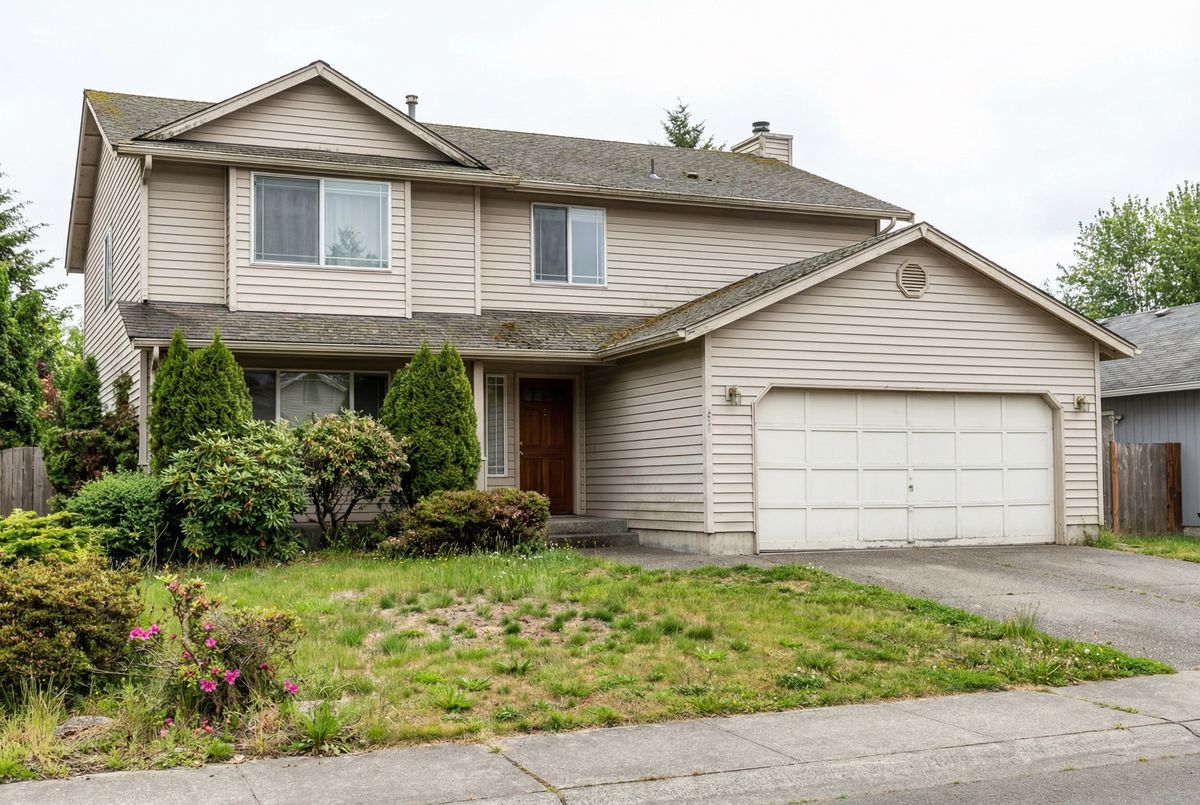
- Condition relative to the comps. The report assumes a standard project on a standard house. If your siding is failing and every comp on the street has been resided, the cost of doing nothing is much larger than the report suggests. If your exterior already presents well, a second exterior project adds far less.
- Days on market. A project can shorten marketing time without changing price, which is real money in carrying costs but does not show up as recouped value.
- Taxes and cost of sale. Recoup percentages are gross. Your invoice carries Washington sales tax, and your sale carries brokerage fees, excise tax and closing costs. Talk to a CPA about how any of this lands on your return.
- What buyers do inside. A perfect exterior on a house with a failed kitchen tends to produce disappointed showings, not offers.
The exterior projects at the top of the 2025 list
Nationally, eight of the top ten projects in the 2025 report are exterior replacements, and a minor kitchen remodel is the only interior project in the top five. Garage door replacement took the top spot for the second year running.
The national averages for the exterior projects most relevant to a pre-sale seller:
| Project, 2025 national averages | Estimated cost recouped |
|---|---|
| Garage door replacement | about 268% |
| Steel entry door replacement | about 216% |
| Manufactured stone veneer | about 208% |
| Fiber cement siding replacement | about 114% |
| Vinyl siding replacement | about 97% |
| Wood deck addition | about 95% |
| Composite deck addition | about 89% |
| Grand entrance, fiberglass | about 85% |
Those figures are as reported from the 2025 study; another trade summary puts manufactured stone veneer at 206% and confirms the same top three, which tells you something useful about how much precision to assume in any single decimal point. Every one of them is an estimate from surveyed agents, not a recorded sale.
Seattle is not the national average, and regional differences are pronounced. Pull the Seattle city table out of the report and use those job costs and resale values, not these, when you build your budget. Local job costs in Puget Sound generally run above national averages, and a percentage calculated on a higher cost base behaves differently than the headline number suggests.
Why replacement projects outrank remodels in this data
Two reasons, and both are structural rather than magical.
First, the denominator is small. A garage door or an entry door is a low four-figure project in most markets. Any plausible agent estimate of added value divided by a small cost produces a large percentage. The same dollar of perceived value divided by the cost of a major addition produces a small one.
Second, exterior replacements read as maintenance solved. Buyers touring a house are pricing risk as much as taste. A new roof, new siding or a new door says the next owner will not be writing that check. A reconfigured primary suite says the last owner had opinions, and buyers discount opinions.
This is also why the top exterior projects hold up in a selective market. Zonda's framing of the 2025 results is blunt about buyer behavior: "Long gone are the days when homebuyers would snap up homes regardless of condition," the firm said, adding that the homes still moving tend to be the ones in solid condition with well-appointed exteriors. Condition is doing more work in pricing than it did a few years ago.
Recouping cost is not profit
A recoup figure above one hundred percent means the estimated value added exceeded the estimated cost. It does not mean you pocketed the difference, because the difference is gross, before tax, before cost of sale, and before the fact that the estimate is an estimate.
Hypothetical example, round numbers, not a FLYP project and not a prediction: a house is expected to list at $800,000 as-is. The owner spends $30,000 on exterior work, including sales tax. If the whole package performed at exactly 120% of cost, the home would be worth $36,000 more, so it lists at $836,000. The gross gain is $6,000. Now subtract the cost of sale on the additional $36,000, subtract two extra weeks of mortgage, taxes and insurance while the work happens, and the margin is thin. If the market softens 2% between the estimate and the closing, the entire gain is gone.
That is not an argument against exterior work. It is an argument for choosing the two or three projects with the largest visible delta per dollar and stopping, rather than doing a comprehensive exterior program because the percentages looked friendly.
Timing exterior work for a late-May listing
A Puget Sound spring rewards planning and punishes optimism. Paint, stain, sealants and roofing all have manufacturer-specified temperature and moisture conditions, and a wet week can stop an exterior crew cold while interior work continues. If you are targeting a late-May listing and it is already the end of April, be realistic about what actually fits.
Generally achievable in a few weeks, weather permitting:
- Garage door and entry door replacement, the two highest-recoup projects in the national data and largely weather-independent to install
- Exterior cleaning, gutter work and trim repair
- Landscaping cleanup, bark, edging and a few mature plantings
- Targeted paint on the front elevation, door and trim, scheduled around dry windows
- Lighting, house numbers, mailbox and hardware
Generally not a few-week project this late in the season:
- Full siding replacement
- Roof replacement, unless you already have a permitted, scheduled contractor
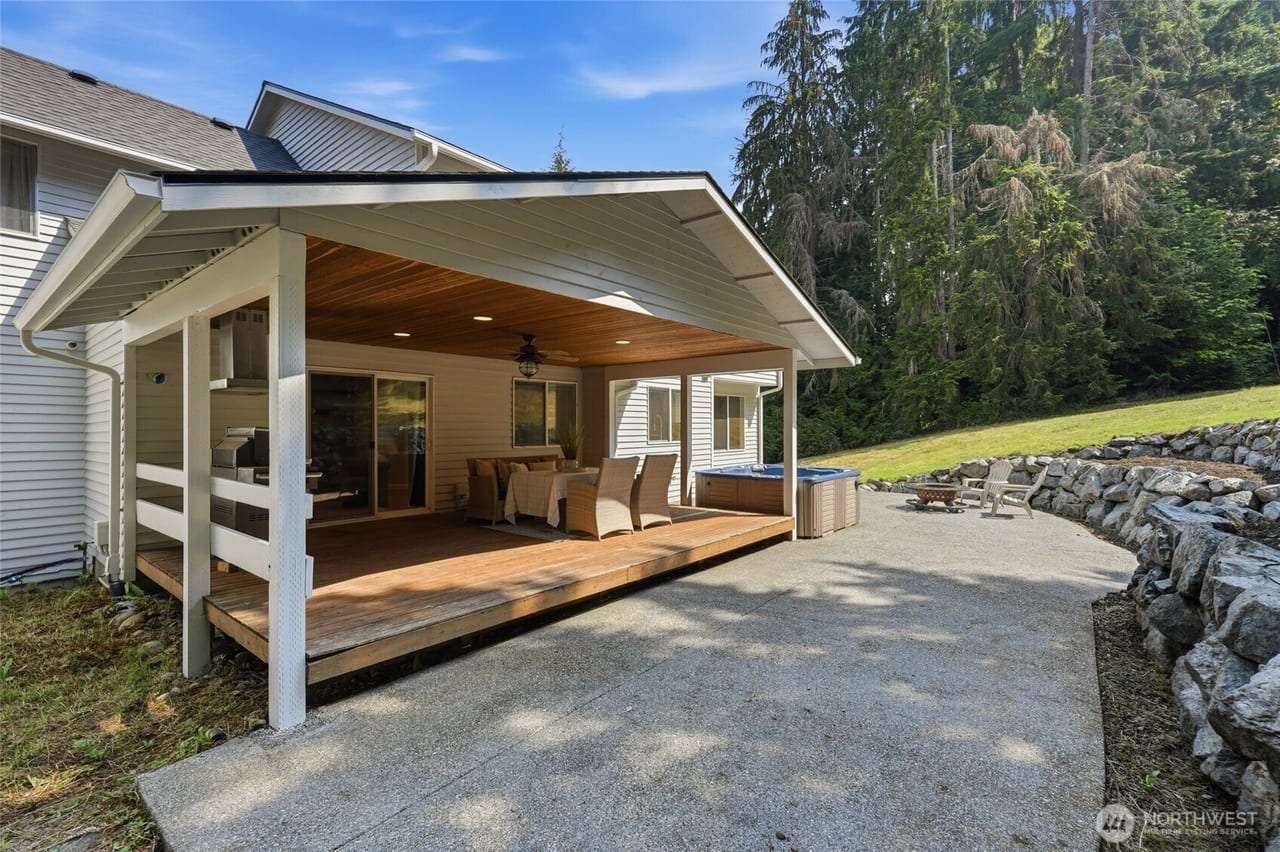
- A new deck with footings, permits and inspections
- Anything requiring design review or HOA architectural approval
If a project will not be finished and photographed by the time you want to be live, it is usually better to price the condition honestly than to list mid-project.
When exterior spending is the wrong call
Be honest about these cases. Skipping the work is sometimes the correct decision.
- The timeline is genuinely short. If you must close by a date, the risk of a weather-delayed exterior project outweighs a few percentage points of estimated recoup.
- An HOA or condo association controls the exterior. You may not be allowed to change the door, siding or paint, and assessments already cover some of it.
- The buyer is a builder. If your lot value approaches or exceeds your improved value, a new garage door is money set on fire. That is a conversation with an agent who knows your zoning, not a conversation with a remodeler.
- The house needs interior work more. Exterior recoup percentages are high, but you cannot fix a kitchen from the driveway.
- You need certainty more than upside. If a fast, clean exit matters more than the last dollar, an as-is sale is a legitimate answer. We can help arrange a cash offer, and the terms depend on the property.
If the plan is right but the cash is not
The awkward part of pre-sale exterior work is that it comes due before the money arrives. That is the problem pay-at-closing renovation exists to solve: FLYP plans, funds and manages the work, and you pay from the sale proceeds at closing, with nothing upfront and no monthly payments. What gets repaid is the fixed contract price on the signed estimate, plus Washington sales tax, plus any change orders you signed, plus the county recording fee. There is no interest during the renovation or for six months after the work is finished. After that the balance accrues 1.5% per month, and ten months after completion it is due directly, whether or not the home has sold. The balance is secured by a deed of trust recorded against the property. The plain-language terms are at how the process works.
It is a real obligation and you can lose money or equity. Markets move, a home can sell for less than projected, and interest can accrue. Anyone who tells you a pre-sale renovation cannot lose money is selling you something. If you would rather pay for the work directly, that is conventional remodeling, and it is often the cheaper path.
The bottom line
Cost vs. Value is a survey of what real estate professionals think projects are worth at resale, not a record of what houses actually sold for, so treat the percentages as a ranking rather than a payout. The ranking is still useful: exterior replacement work sits at the top because it is cheap relative to the perceived value and it reads as maintenance already handled. Pull the Seattle table rather than the national one, pick the two or three projects your house genuinely needs, and finish them before the photographer arrives. If the timeline or the weather will not allow it, price the condition honestly instead.
If you want a second set of eyes on the scope and the numbers, start here.