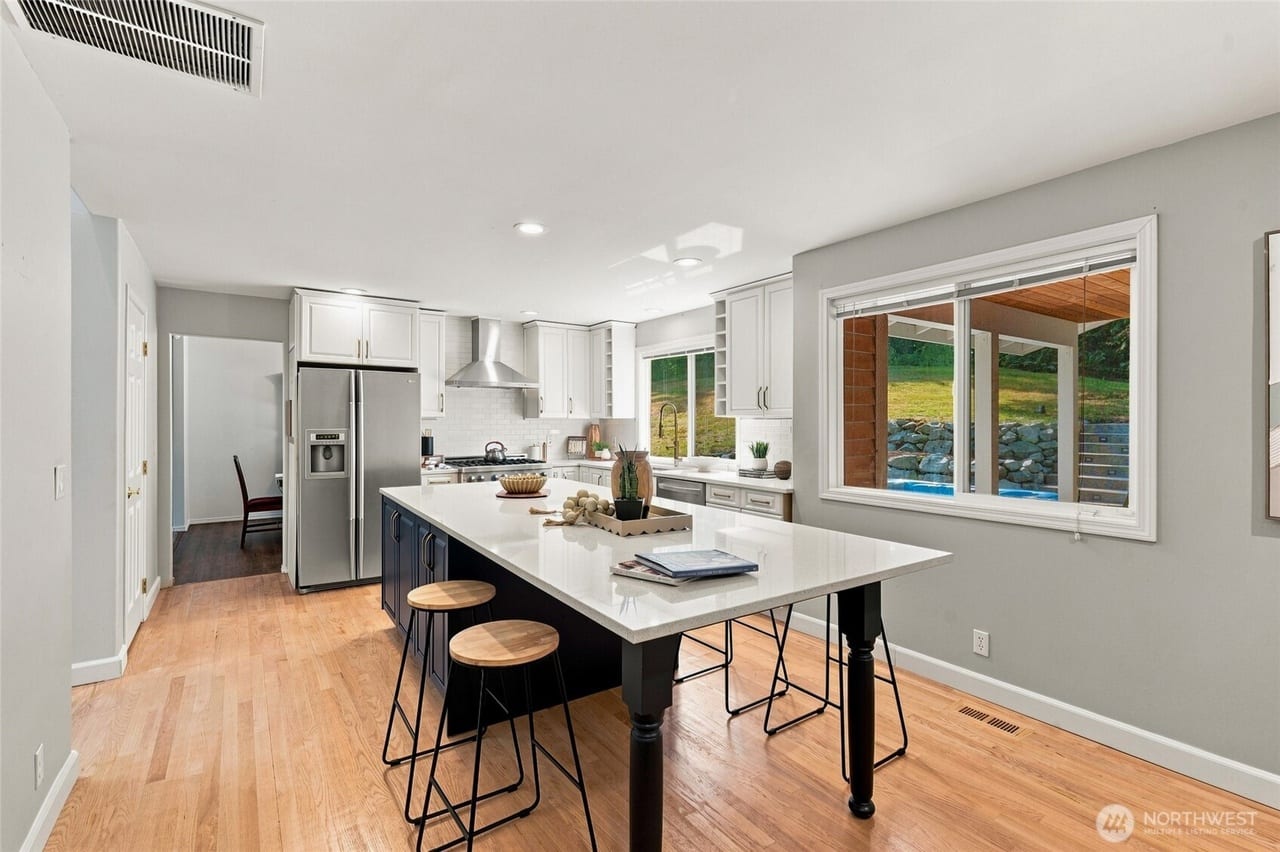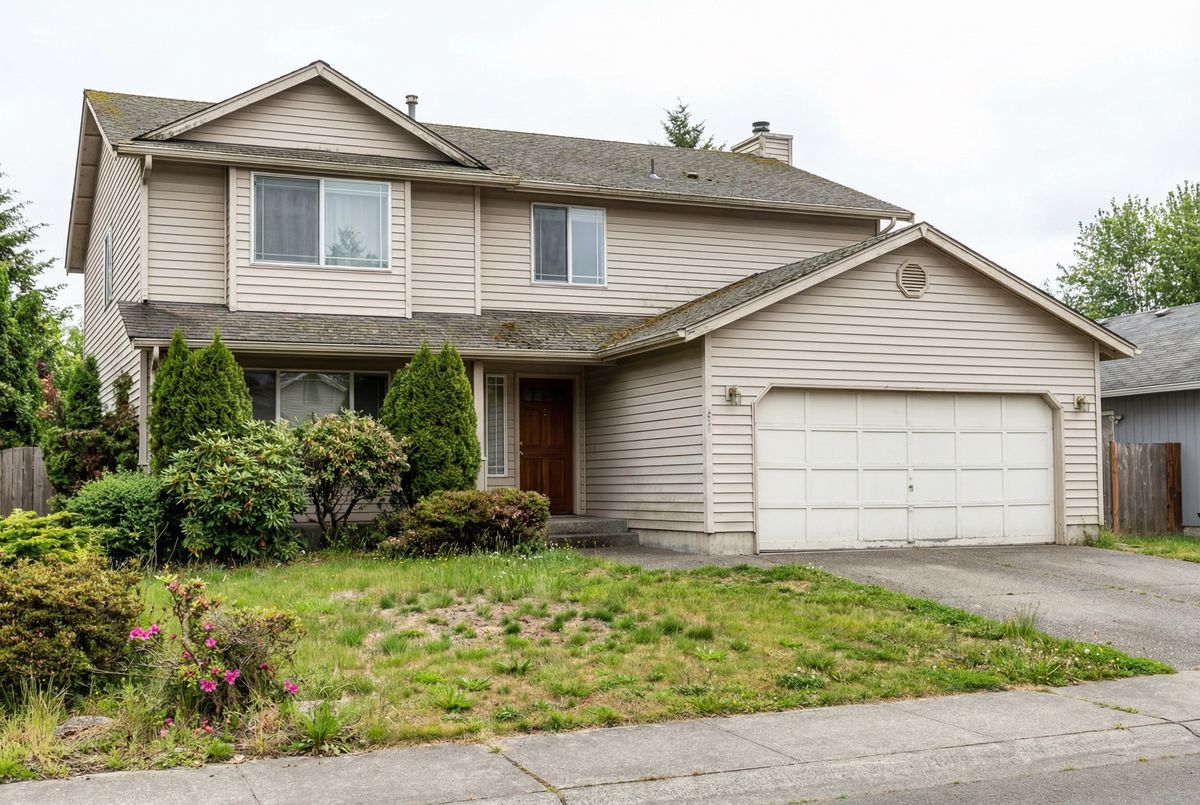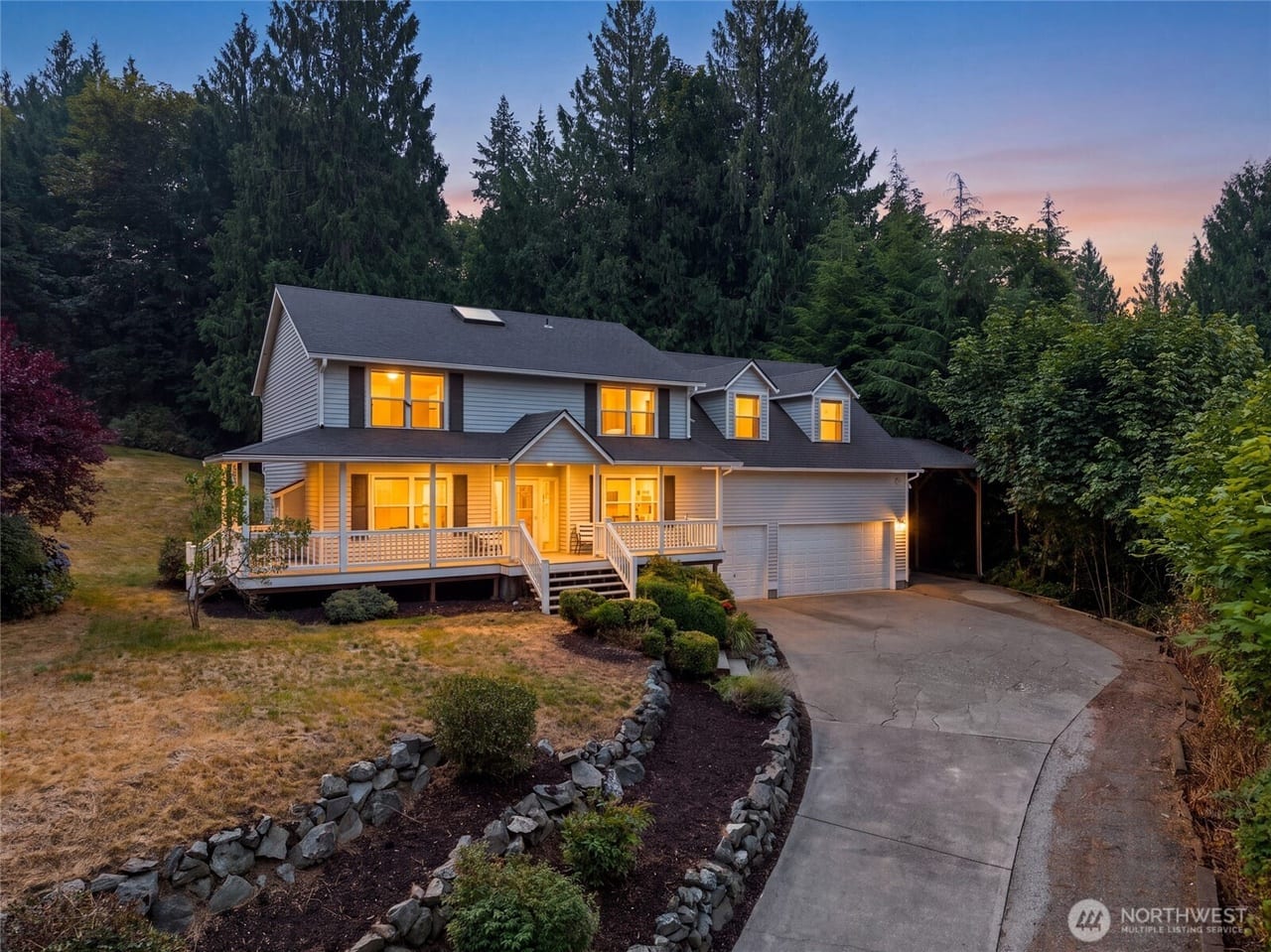
Updated September 2026 with FLYP's current project figures.
The short answer
There is no universal right answer to selling as-is versus fixing first. Four things decide it: how big the condition gap is, how hard your deadline is, how much cash you can put at risk, and who actually buys a house like yours. Work through them in that order and the path picks itself.
If you want to sell this fall and your house is dated, early August is the week the decision has to get made. Anything that involves crews has to start soon to be photographed and listed by mid-September, and the postcards in your mailbox are timed to catch you right now, while you are still undecided.
1. How big is the condition gap?
Not "is my house dated." The question is how far your house sits below the homes a buyer will compare it to in your own neighborhood, this fall, at your price point. A house with worn carpet, oak cabinets and a 1990s bathroom sits maybe one notch below the comps. A house with a failed roof, a cracked sewer line, knob-and-tube wiring and a kitchen a lender's appraiser will flag sits several notches below.
Ask your agent for a straight answer to one question: what did the renovated version of my house on my street close for in the last ninety days, and what did the unrenovated version close for? The spread between those two numbers is your condition gap. Every path below is a different way of handling that spread.
2. What is your real deadline?
There is a difference between "I want to be done by Thanksgiving" and "the estate has to be settled by October" or "my new lease starts September 15." A soft deadline gives you the option to do work. A hard deadline with a date on a legal document usually does not.
3. How much cash can you put at risk, and how do you feel about risk?
Two separate things. Plenty of owners could write the check and would still rather not spend it on a house they are leaving. That is a legitimate answer, not a failure of nerve.
4. Who buys this house?
A modest three-bedroom rambler under the county median is priced for a buyer using an FHA or conventional loan with a small down payment, and that buyer has very little cash left after closing to fix anything. A house near the top of its submarket is priced for a buyer with more resources and far higher expectations of finish. The first buyer pool punishes deferred maintenance. The second punishes dated kitchens and baths. That difference changes what is worth doing.
What the market is doing while you decide
The backdrop matters, because condition discounts are not constant. Northwest MLS counted 24,888 active listings at the end of July 2026, up 19.8% from 20,781 a year earlier, with 11,517 new listings during the month and inventory growing in 25 of the 27 counties it covers. The same July snapshot put the area-wide median sales price at $640,000, down 1.5% from July 2025, with King County at $879,500 and Snohomish at $719,000.
Supply is loosening rather than collapsing. King County ran 3.4 months of inventory in May 2026 against 2.8 months in May 2025, a level that is still tight by historical standards but well off the frenzy. Buyers have choices. That is exactly the market in which condition gaps get expensive.
When as-is on the open market is the right call
Choose this when the condition gap is small and cosmetic, your buyer pool is willing, and you would rather price the house correctly than manage a project.
As-is on the MLS is not the same as a cash offer. You are still getting real market exposure, still getting multiple buyers, and still able to negotiate. You are simply declining to make repairs and saying so up front.
How to price it: start from the renovated comp, subtract the full cost a buyer would pay to do the work themselves, then subtract again for the hassle and uncertainty they are absorbing. Buyers discount condition more than it costs to fix, because they are pricing in unknowns. If your agent's as-is number is the renovated comp minus a token amount, the listing is going to sit.
Sitting is its own cost. Showings across the NWMLS area had already thinned by early summer, with 117,525 showings scheduled in June 2026, 9.3% below May and 4.9% below June 2025 even as active listings rose 16.4% year over year.
The risk: you carry the house while it sits, and the first price reduction usually costs more than the repairs would have.
When a cash offer is the right call
Choose this when the deadline is hard, the deferred maintenance is structural or expensive, you have no cash, and certainty is worth more to you than the last slice of equity. Inherited houses full of contents, rentals left rough by a tenant, and homes with a failed foundation or sewer line are the honest fits.
Evaluate one without a stopwatch running:
- Get the offer in writing with the inspection contingency, earnest money, closing date and any "renegotiation after walkthrough" language spelled out.
- Ask what comes out of the gross. Some offers net far less than the headline after fees and deductions.
- Get one real listing opinion for comparison, as-is, from an agent who is willing to say the number out loud.
- Never sign at the kitchen table on the first visit. A legitimate buyer will still be there in 48 hours.
The risk: speed and certainty are what you are buying, and you pay for them out of your equity. If your condition gap was actually small, a cash offer is the most expensive way to solve it. See how cash buyers compare and selling as-is.
When targeted repairs are enough
Choose this when the house shows reasonably well but has two or three specific items that will blow up an inspection. This is the highest-leverage, lowest-drama path, and for a lot of Puget Sound houses it is the right one.
The classic Washington example is the side sewer. On older Seattle-area homes a sewer scope is routine, and when it finds a problem the seller's options are to repair it, credit the buyer, or disclose it and sell as-is. Same logic for an active roof leak, a dead furnace, failed seals, or a deck with rot. Fix the items that kill financing or scare buyers. Leave the dated-but-functional kitchen alone.
Exterior and curb-appeal work tends to hold up better than interior work in published payback tables. Read those tables carefully, though. Zonda's Cost vs. Value Report estimates resale value from surveys of real estate professionals combined with an econometric model, not from matched sales of homes that did and did not get the work, so its percentages are informed opinion rather than transaction data. Treat every published figure as a range, not a promise.
The risk: if the condition gap is really several notches wide, targeted repairs quietly become the worst of both paths. You spend real money and the house still reads as dated.
When a fuller pre-sale renovation makes sense
Choose this when the condition gap is wide, the renovated comps in your neighborhood are clearly and repeatably higher, and you have enough time to finish and photograph before you list.
Here is what our own files show, with the caveats attached. Across the 12 homes that had both an as-is value and a projected after-renovation value, out of 16 homes FLYP had underwritten as of September 2026, the projected lift over as-is value had a median of 27 percent and a range of 1 percent to 89 percent. Projected dollars added had a median of $190,000.
Those are projections made during underwriting, not sale results. No FLYP home has sold yet, so there is no sale price and no realized gain to report. Several of those files project almost no lift at all. Your house is not the median, and the low end of that range is as real as the high end.
The risk, stated plainly: a renovation puts your equity in the market's hands for the length of the project. The market can move against you. The house can sell for less than projected. If the work is funded and repaid at closing, interest can start accruing, and a longer marketing period eats the gain.
That is why we apply a coverage test. Projected net proceeds, meaning the projected after-renovation value less selling costs and less the balance of every senior lien, divided by the maximum amount that could ever become payable to FLYP, has to be at least 1.30. It is an underwriting safety margin, not a return and not a promise, and some houses should not be renovated at all.
The four paths side by side
| Path | Time before listing | Cash from you | Certainty | What drives your net |
|---|---|---|---|---|
| As-is on the MLS | Days | None | Medium. Depends on pricing | Correct as-is price, plus days on market |
| Cash offer | Days to a few weeks | None | Highest | The discount inside the offer |
| Targeted repairs | Two to four weeks, typically | Low to moderate | Medium-high | Whether you picked the right items |
| Full pre-sale renovation | Longest. Get a written schedule | None with pay-at-closing | Lowest | Condition gap, execution, market timing |
How FLYP handles each of these
We are a renovation company, not a brokerage, a lender or a flipper, and the work is performed by Green State Restoration, LLC, a licensed and insured Washington general contractor.
- Renovation is wrong for your house? We can help arrange an as-is cash offer instead. Terms depend on the property.
- Targeted repairs? We will scope and price them as a conventional paid remodel, or fund them the same way we fund a full project.
- Full pre-sale renovation? Pay-at-closing means $0 upfront, $0 during the work and no monthly payments. You repay the fixed contract price on the signed estimate, plus Washington sales tax, plus any change orders you signed, plus the county recording fee, out of closing. No interest during the renovation and none for six months after the work is finished. After that the balance accrues 1.5% per month, and ten months after completion it is due directly whether or not the home has sold. The balance is secured by a deed of trust you sign before an independent notary before work starts, released within ten business days of payoff. Workmanship is covered by a one-year written warranty. The plain-language contract summary spells all of it out.
Hypothetical example, round numbers only. If the as-is value is $600,000, a renovated comp supports $740,000, and the fixed renovation price lands at $80,000 plus tax, the question is whether the projected spread survives a soft market, a longer marketing period and accruing interest. If it does not survive with room to spare, take the as-is path.
The bottom line
Measure the condition gap first, then check it against your deadline, your cash and your buyer pool. A small gap points to as-is or targeted repairs. A hard deadline with expensive structural problems points to a cash offer. A wide gap with time and equity behind it is the only case where a full pre-sale renovation is the better trade, and even then it can go against you. Talk to a CPA or attorney about how any of this affects your specific situation.
If you are not sure which of the four paths fits your house, tell us about it and we will tell you which one we would pick, including when that answer is "do nothing and list it."