Updated September 2026 with FLYP's current project figures.
The short answer
You cannot make the renovate-or-sell decision first. You have to establish sale authority, document the date-of-death value, and get a clear picture of the estate's monthly carrying cost. Then the decision about how to sell mostly makes itself.
Here is the sequence, in the order it actually has to happen.
- Get appointed and get letters.
- Confirm what your letters allow you to do without a trip back to court.
- Document the value of the house as of the date of death.
- Add up the monthly carrying cost while the house sits.
- Clean it out far enough that a contractor or an agent can see the condition.
- Choose among renovating before listing, listing as-is, or arranging a cash offer.
Most of what you will find online about inherited houses in Washington is published by companies that buy houses. Their content is accurate about probate and then quietly assumes the answer is a fast discounted sale. Sometimes it is. Often it is not. The difference is usually condition, and condition is fixable.
Step 1: Sale authority comes before the listing agreement
A personal representative's authority starts at appointment, not at death. It begins when the court issues letters testamentary or letters of administration. Until then you can secure the house, keep the utilities on and keep the insurance in force, but you are not in a position to sign a listing agreement, a purchase and sale agreement, or a construction contract on behalf of the estate.
The next question is what your letters let you do without further court involvement. In Washington, the practical fast lane is nonintervention powers. Under RCW 11.68.011 a court grants them when it determines the estate is solvent, taking probate and nonprobate assets into account, and the will does not say otherwise. The statutory list of those powers is specific, and it includes the power to mortgage, encumber, lease, sell, exchange, convey, assign, and otherwise transfer the decedent's real and personal property. That single clause is why so many Washington estate sales close without a court hearing.
Without those powers, the picture is different. A personal representative with nonintervention powers has no duty to follow the procedures of RCW 11.76.010 through 11.76.080 or chapter 11.56 RCW, which are exactly the procedures a supervised administration does have to follow. Read chapter 11.28 RCW with your attorney and find out which track you are on before you promise a buyer a closing date.
One more thing the statute says out loud: a personal representative with nonintervention powers must exercise a discretionary power in good faith, with honest judgment, and in accordance with the terms and purposes of the probated will and the interests of the beneficiaries. That standard is the reason you document every decision you make about this house, including the decision to renovate or not.
Step 2: Pin down the date-of-death value before anyone touches the house
This is the step heirs skip, and it is the one that costs real money later.
Under Section 1014 of the Internal Revenue Code, property acquired from a decedent takes a basis equal to the fair market value of the property at the date of the decedent's death. That is the step-up in basis: for tax purposes it is as if the house were purchased at its date-of-death value.
What that means in practice: if the house was worth $700,000 when your parent died and the estate sells it for $720,000, the taxable gain is measured from the stepped-up figure, not from what your parent paid in 1986. Selling costs and capital improvements factor in too. The IRS walks through what counts as basis and what counts as a selling expense in Publication 523.
Two practical notes:
- Document the value now, not at closing. A retrospective appraisal as of the date of death is the cleanest support. A broker price opinion with photographs and comparable sales is better than nothing. Proving the new basis is the estate's job, and it is much easier to prove while the house is still in its original condition.
- There may be an alternate valuation date. Section 1014 recognizes an election under section 2032 to value the property at the applicable alternate valuation date instead of the date of death. Whether that is available or useful is a CPA question, not a contractor question.
Most estates never file a Washington estate tax return, but check the threshold rather than assuming. Washington's Department of Revenue states that the filing threshold and exclusion amount is set at $3,076,000 for decedents passing away between January 1, 2026 and June 30, 2026, and $3,000,000 for decedents passing away on or after July 1, 2026. Confirm the current figure on that page, and confirm your estate's position with a CPA or the estate's attorney.
Step 3: Add up what the house costs the estate every month
Write this number down. It is the honest clock on every other decision.
- Mortgage payment, if there is one, plus any reverse mortgage payoff deadline
- Property taxes. In King County, the first half is due on April 30 of each year and the second half is due on October 31, with late charges accruing monthly after that.
- Insurance. Call the carrier the week you are appointed. A policy written for an owner-occupied home may not cover a house nobody lives in, and a lapse or a denied water-damage claim is the single most expensive thing that can happen to an estate house.
- Utilities kept on at a minimum, because heat and water matter for both condition and inspections
- Yard, gutters, pest control, and anything that keeps the property from looking vacant
Now hold that number next to the calendar. An estate opened over the winter often reaches clear sale authority in spring, which is the part of the year Puget Sound sellers most want to be in front of buyers. Carrying an empty house from May into the fall is a real cost, and so is listing a tired house into the slowest weeks of the year.
Step 4: The three exits, compared honestly
| Renovate, then list | List as-is on the open market | Arrange a cash offer | |
|---|---|---|---|
| Cash needed from heirs | None with a pay-at-closing structure | None, beyond clean-out | None |
| Timeline | Longest. Construction plus listing | Medium | Shortest |
| Net proceeds | Highest when the gap between as-is and renovated value is wide | Middle | Usually lowest, in exchange for speed and certainty |
| Certainty | Lowest. Market can move during the work | Medium | Highest |
| Best when | Dated but structurally sound, heirs aligned, no hard deadline | Condition is decent, or the estate needs to be done | Deadline, conflict, major structural problems, or an out-of-state PR who cannot manage anything |
Renovating first is not automatically right. If the heirs are in conflict, if someone needs cash in sixty days, if the house has foundation or major systems problems that swallow the budget, or if nobody local can make decisions, a clean as-is sale is the better answer and you should not feel talked out of it. That is why selling as-is exists as a service and not as a consolation prize.
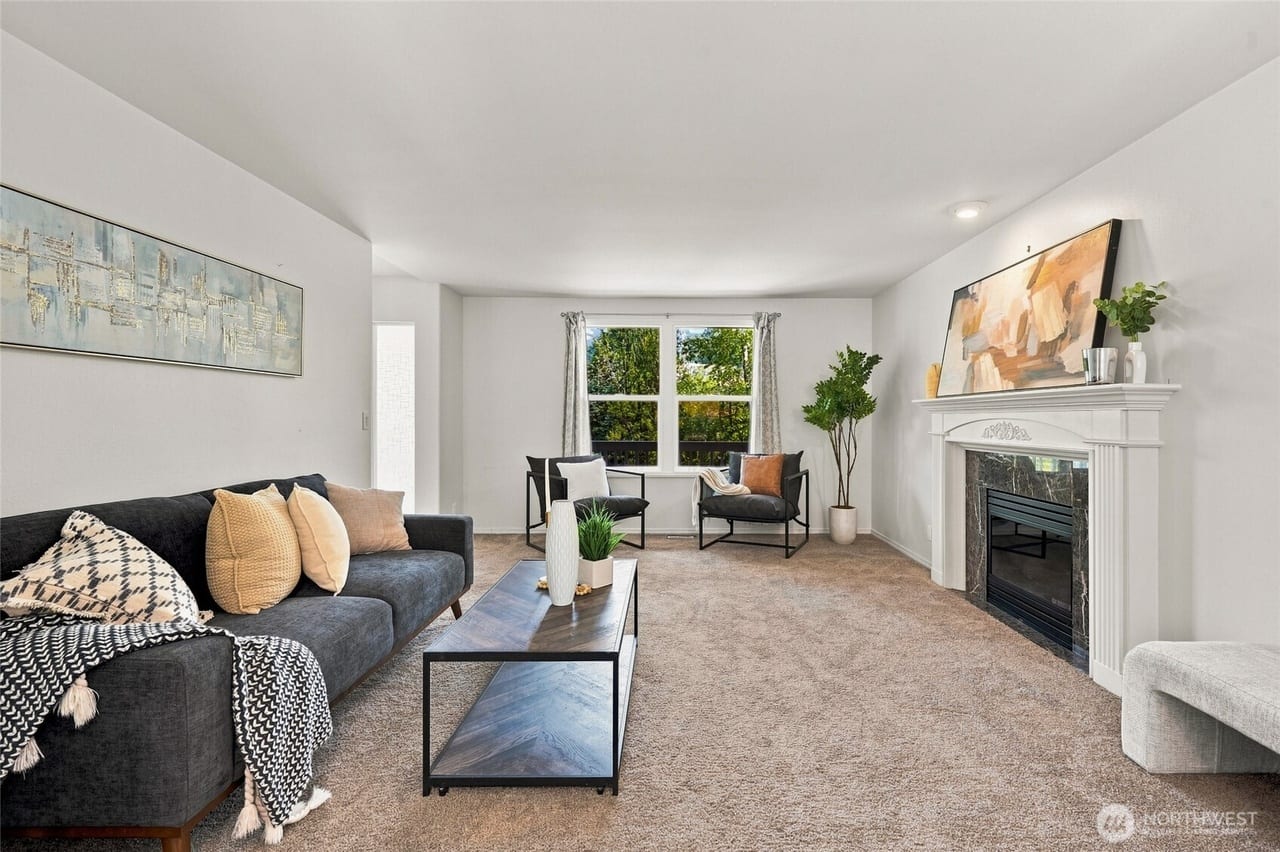
Where renovating first tends to win is the very common King County case: a 1960s or 1970s house, solid bones, original kitchen, carpet over hardwood, popcorn ceiling, a roof with a few years left. Buyers in that price band are financing, not paying cash, and they discount heavily for work they have to imagine doing themselves.
Across the 12 homes that had a projected after-renovation value in FLYP's underwriting files as of September 2026, out of 16 homes underwritten in total, the projected lift over as-is value had a median of 27% and a range of 1% to 89%, and the projected dollars added had a median of $190,000 and a range of $10,000 to $500,000. Those are projections made during underwriting, not sale results, several files projected almost no lift at all, and no FLYP home has sold yet.
How a pay-at-closing renovation works when the seller is an estate
The pay-at-closing structure was built for sellers with equity and no spare cash, which describes most estates. FLYP plans, funds and manages the work, and the estate pays out of the sale proceeds at closing. The renovation itself is performed by Green State Restoration, LLC, a licensed and insured Washington general contractor.
What the estate would owe at closing is the fixed contract price on the signed estimate, plus Washington sales tax, plus any change orders the personal representative signed, plus the county recording fee. There is no upfront payment, nothing due during the work, and no monthly payments.
The parts a personal representative specifically needs to understand:
- The balance is secured by a deed of trust recorded against the property. It is signed before an independent notary before work starts and released within ten business days of payoff. This is where your letters matter. Encumbering estate real property is exactly the authority described in RCW 11.68.090, and if you do not hold nonintervention powers, ask the estate's attorney what the court requires first.
- There is a clock, and probate delays do not pause it. No interest accrues during the renovation or for six months after the work is finished. After that the balance accrues 1.5 percent per month. Ten months after completion the balance is due directly, whether or not the home has sold. Paying it off early stops the interest.
- The estate can lose money or equity. The market can move, the house can sell for less than projected, and interest can accrue. FLYP requires a minimum 1.30x coverage ratio before taking a project, meaning projected net proceeds, the projected after-renovation value less selling costs and less the balance of every senior lien, divided by the maximum amount that could ever become payable to FLYP. It is an underwriting safety margin, not a return and not a promise about the sale.
- The price is fixed and every scope change is a signed change order before the work is done, which is also how you keep a clean record for the beneficiaries. There is a one-year written workmanship warranty.
The plain-language summary of what gets signed is at how the process works. FLYP is not a brokerage, not a lender and not a house buyer, takes no commission and no share of the sale, and earns a normal general-contractor margin built into the fixed price.
Multiple heirs: get agreement in writing before any work starts
The personal representative usually has the legal authority to act. That is not the same as having agreement. Renovation decisions are where sibling estates blow up, because someone will remember the house differently than the invoice reads.
Before a contract is signed, circulate one page in writing: the as-is value estimate, the fixed contract price, the projected post-renovation value, the carrying cost per month, and what happens if the house sells for less than projected. Get everyone's acknowledgment. If one heir wants to keep the house, resolve that before construction, not during.
When to bring in the professionals
Bring in a probate attorney at the start, not at the offer. You need to know whether you have nonintervention powers, whether notice to creditors has been handled, and what you can sign. Bring in a CPA before you sell, to handle date-of-death basis, the sale reporting, and whether an estate income tax return is needed. Neither this post nor anyone at FLYP can give you legal or tax advice.
An agent who has closed estate sales in your specific submarket is worth more than one who has closed more houses overall.
The bottom line
Do it in order. Letters first, then the scope of your powers, then a documented date-of-death value, then the monthly carrying cost. Only after those four do you have the facts to choose between renovating, listing as-is and arranging a cash offer, and only then can you show the beneficiaries why. A dated but sound King County house with aligned heirs and no deadline is the case where renovating first tends to pay; conflict, a hard date or major structural problems point the other way. Take the legal and tax questions to a probate attorney and a CPA before you sign anything.
If you are a personal representative with sale authority, a dated house in King County or elsewhere in our Washington service area, and no estate cash to put into it, that is the exact situation the pay-at-closing path was built for. Start at selling an inherited house or get started and we will tell you plainly whether renovating first makes sense for this house, including when it does not.